AI Integration for E-Commerce Business: Platforms, Uses, and Architecture
Most e-commerce leaders have already sorta tried AI in commerce: a chatbot here, a product-description generator there, and generally it works until it doesn’t. Far fewer have actually built AI integration for e-commerce business into the core of their business. That distinction matters more than it sounds like it should, and it’s the one that separates teams that see real revenue lift from teams that end up with a pile of disconnected pilots.
Installing a standalone AI tool is a procurement decision, and honestly it feels simpler at first.
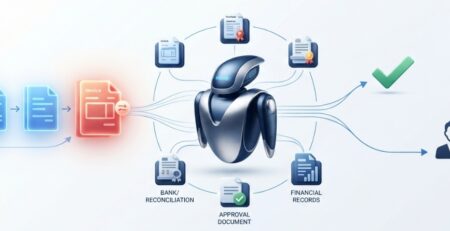
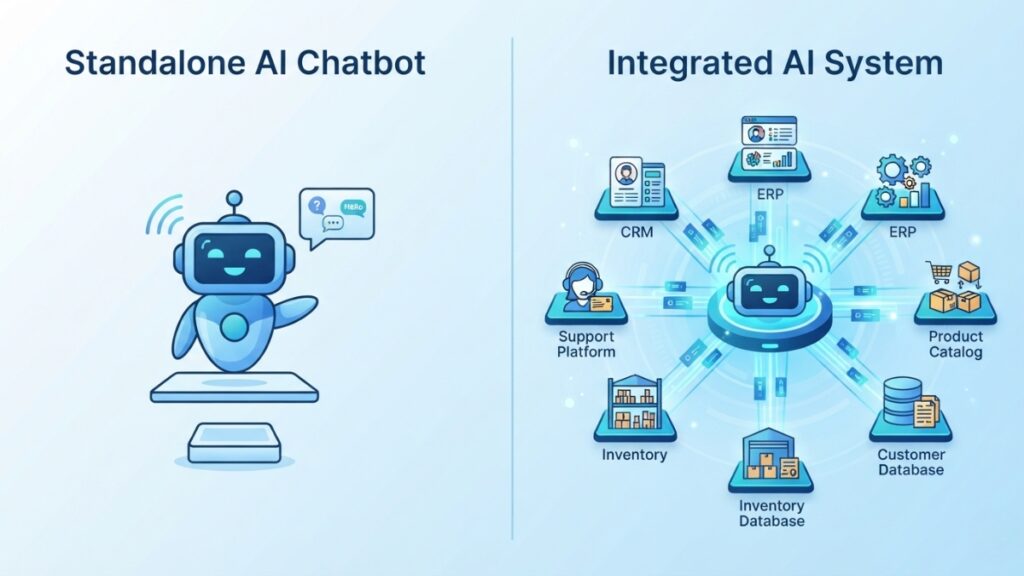
But AI Integration is something else entirely, because it means you’re connecting models to your product catalog, order history, CRM, and support queue so the system can use live business context instead of just guessing. The former mostly gives you a demo, a quick showcase. The latter gives you a compounding advantage in product discovery, tailored experiences, customer support, marketing, and the everyday operations part that actually moves the needle.
It talks about the architecture that helps integration stay sturdy instead of brittle, and then it brings up the specific use cases where the ROI is the most obvious . After that, it gets into implementation and governance decisions, the kind that decide if a project really scales or if it quietly gets shelved after six months, maybe before people even notice.
What Is AI Integration in E Commerce?
There’s a real meaningful gap between three things that people often jumble together as “AI in retail”, but honestly they’re kind of not the same.
- First, you have a standalone AI application: it’s a tool that runs on its own, with its own login, its own data, and honestly very little to no connection to the rest of the stack.
- Then there is AI connected to store data and workflows: this is a model that can read from and write to the systems your business already relies on, so the results aren’t generic; they actually mirror inventory that’s real inventory, customer history that is real, and policy that matches what you’ve already set up.
- And finally, a fully integrated, AI-powered commerce ecosystem: this is where multiple AI services work across the customer journey, coordinated by shared data and shared business rules, not just as isolated features that happen to sit side by side.
Enterprise AI integration is the second and third categories. In practice, that means the AI layer needs to talk to:
- Storefronts (web and mobile)
- Product catalogs and PIM systems
- CRM and ERP platforms
- Order management systems
- Customer-support platforms
- Marketing automation tools
- Data warehouses and analytics pipelines
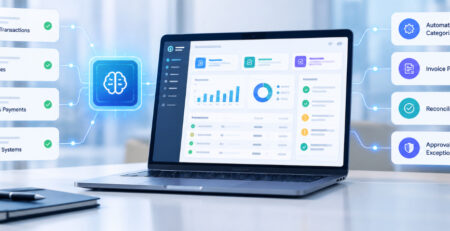
Once those connections exist, a recommendation engine can factor in real inventory levels, a support assistant can pull an actual order status, and a marketing model can segment customers using data that’s a day old instead of a quarter old. This is the difference between AI that sounds smart and AI that is actually useful to the business.
Benefits of AI Integration for E Commerce Businesses
- Personalized customer experiences: Connected AI can surface relevant products, content, offers, and even search results based on what someone is actually browsing and buying, not those static merchandising rules that seem to go stale within weeks or days, depending. Basically, it’s like the system learns on the fly- and still keeps things a bit more conversational, in a way.
- Faster customer service: you get automated replies, intelligent ticket routing, order status help, and agent copilot support, all of which cut down resolution time without you needing a proportional bump in support headcount.
- Better operational decisions come too: because demand forecasting, inventory planning, fraud prevention, and customer analytics stop being just those quarterly spreadsheet rituals, and start running as continuous model-driven workflows, more steady like that.
- Scalable marketing and content: is another piece where it works: product descriptions, ad copy, email outreach, and customer segmentation can be made and iterated at a volume that a normal content team couldn’t really match, not manually anyway, as long as the data feeding the models stays clean.
Personalization and service automation are the two spots where generative AI integration for e-commerce businesses creates the fastest, most measurable kind of returns, and it’s mostly because both areas convert pretty directly into lift on conversion rate and lower cost-to-serve metrics that finance teams already track.
Best AI Integration Platforms for E-Commerce
There isn’t really a single best platform; it’s mostly a question of what you already have in place, how mature the data situation is, and how much bespoke tweaking the business actually needs.
| Platform | Best Suited For | Main AI Capabilities | Customization | Integration Complexity |
| Shopify Magic and Sidekick | Small and mid sized Shopify stores | Content creation, product descriptions, store assistance, workflow support | Moderate | Low |
| Adobe Commerce | Mid sized and enterprise stores | Semantic search, recommendations, personalization, merchandising | High | High |
| Salesforce Agentforce Commerce | B2B and B2C Salesforce users | Customer-data integration, service automation, merchandising, agentic commerce | High | High |
| Google Cloud AI Commerce Search | Custom and large-scale commerce applications | Conversational search, semantic discovery, personalization, analytics integration | High | Medium to high |
| Custom AI Integration | Businesses with unique systems or workflows | Custom recommendations, assistants, automation, analytics, proprietary models | Very high | High |
Built In, Third Party, Custom, or Hybrid?
A built-in platform AI gets you going quickest; it’s already connected into the commerce layer you’re running. Then third-party tools broaden what you can do, like a capability set that goes past whatever any one platform delivers on its own, natively. And if you really want the most control, going with a custom AI integration is kind of the route,but it usually costs more engineering work and setup,so be ready for that part. In real life most Enterprise system integration teams end up with a hybrid architecture: native capabilities handle the everyday, run-of-the-mill use cases, while the custom AI services take care of what is actually differentiating the business,so it’s not just a generic add-on.
Real World AI Use Cases in E Commerce
- Personalized Shopping and Product Discovery
This is kind of the most mature kind of AI solution for online retail businesses. It covers things like product suggestions that feel personal, also natural language and semantic search, plus some typo tolerance, search intent recognition, real-time personalization, comparisons between products, and even upselling and cross-selling. The best implementations tend to gather signal from browsing behavior, purchase history, product attributes, what similar customers are doing, and the current session data all together, not just one part of that in isolation, and yeah, it shows.
- Conversational AI and Customer Support
Shopping assistants and support automation these days kinda share the same core infrastructure. This shows up in product picking help, sizing and compatibility questions, handling the FAQ, order updates and tracking, returns plus exchanges, ticket sorting, suggested answers, sentiment checking, plus a clean transfer to a human agent when it’s needed. This level of automation relies on effective AI customer support integration, where AI connects with helpdesks, CRMs, knowledge bases, and order management systems to access real-time business data. Businesses evaluating native AI, dedicated AI agents, or custom AI support solutions should consider how each approach affects scalability, workflow flexibility, and long-term operational efficiency.
- AI Generated Product and Marketing Content
Product titles and descriptions, category pages, image metadata, ads, email campaigns, promotional stuff, and even localization really all can get an advantage from AI API integration at scale, especially with catalogs that have thousands of SKUs where doing content by hand just isn’t feasible, like at all.
- Forecasting, Inventory, and Operations
Sales forecasting, reorder planning, stockout prediction, warehouse allocation, seasonal-demand analysis, and inventory optimization are the places where AI in ecommerce quietly brings some of the largest cost savings; it’s kind of invisible too, and most customers never notice the shift.
- Fraud Detection and Predictive Marketing
Transaction risk analysis, kind of unusual customer behavior detection, account abuse detection too, and then false positive reduction are placed right next to customer lifetime value modeling, churn prediction, purchase intent scoring, personalized campaigns, and abandoned cart recovery, like all of it. And both groups of use cases sorta rely on the same core capability: always-on, connected behavioral data, flowing in continuously, not just in chunks.
E-Commerce AI Integration Architecture
Core Architecture Layers
A durable cloud AI for ecommerce architecture is generally built across seven layers:
- Customer channels: website, mobile application, chatbot, marketplaces, yeah
- The commerce layer has things like catalog and shopping cart, then checkout, payments processing, order management stuff, I mean.
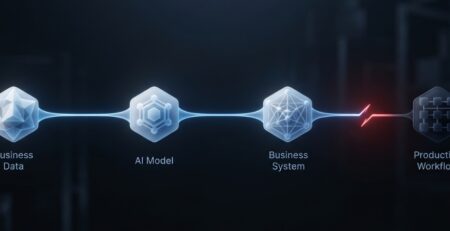
- Integration layer is usually made of application programming interfaces, webhooks, middleware, event queue systems, and all that.
- AI orchestration layer includes prompts, workflow steps, business rules, and agent coordination maybe more or less.
- AI services like LLMs, recommender engines, search, predictive forecasting, and computer vision stuff.
- The data layer includes product, customer, order, CRM, analytics, plus those vector-based scraps.
- The governance layer is more about authentication, access control, monitoring, privacy management, and audit logs.
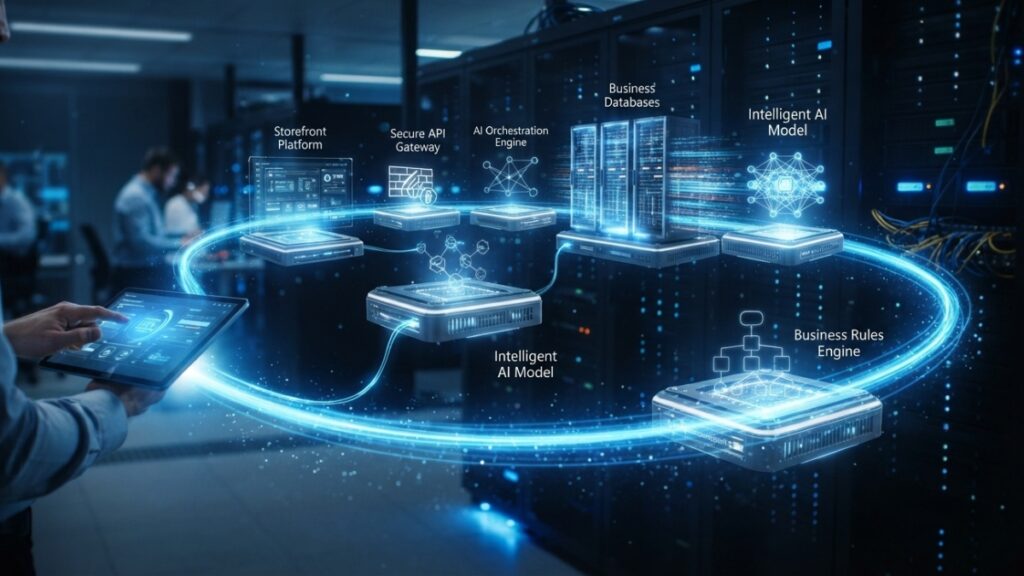
Example AI Integration Data Flow
A simplified request might move like this:
Customer Query → Storefront → API Gateway → AI Orchestration → Business Data → AI Model → Business Rules → Customer Response
Real-time processing works better for recommendations, search, and chatbot interactions, where latency really hits conversion rate. But batch processing seems more suited for customer segmentation, forecasting, and catalog enrichment, where correctness matters more than speed, I guess.
Architecture, Security, and Governance Considerations
Headless and composable commerce architecture, API based connections, customer consent management, and personally identifiable information handling all have to be designed from the start, not like later after launch. Also role based access, encryption, AI model access controls, response logging, and a bit of human review for sensitive actions they become this governance backbone, so the AI integrated system stays auditable as it grows in scale. And yeah, it cannot be retrofitted, because otherwise the whole thing gets messy fast.
How to Implement AI in an E-Commerce Business
Step 1: Select a Measurable Use Case
Choose one high-value problem tied directly to a commercial or operational goal, not a broad, unbounded ambition.
Step 2: Review Data and Existing Systems
Assess product, customer, order, support, and behavioral data. Identify missing information, inconsistent formats, and disconnected systems before writing a line of integration code.
Step 3: Choose the Platform and Integration Approach
So compare native platform AI with all those third party tools, API based services, custom development, and some hybrid architecture sort of setup against what you can actually do in your real constraints.
Step 4: Build and Test a Proof of Concept
Start with the first test using just one product category, one customer group , one storefront, or even one workflow. Check the accuracy, how relevant it stays, the speed of the response, also the whole security side of it, and what happens when it drops back on the wrong answer or just kinda guesses again.
Step 5: Launch, Monitor, and Improve
Connect the required systems, and release things gradually. Then track how it performs compared to your baseline, and refine the models and workflows using real customer data rather than those synthetic test cases.
Common AI Integration Challenges
| Challenge | Why It Happens | Recommended Solution |
| Poor or disconnected data | Customer, product, and order information exists across different systems | Clean, normalize, and connect data through a unified data layer |
| Legacy system limitations | Older systems may not support modern APIs or real-time processing | Use middleware, APIs, and gradual system modernization |
| Inaccurate AI responses | Models may lack reliable business context | Use approved knowledge sources, RAG, business rules, and human escalation |
| Privacy and security risks | AI may access sensitive customer or commercial data | Apply access controls, encryption, logging, and data-minimization practices |
| High integration and maintenance costs | Complex projects involve multiple platforms and services | Begin with one measurable use case and create reusable components |
| Difficulty proving value | Projects may launch without a clear baseline | Define KPIs before implementation and compare results against existing performance |
How to Measure E-Commerce AI Performance
- Sales and Customer Experience: things like conversion rate, average order value, revenue per visitor, cart abandonment rate, customer satisfaction score, you know, that kind of overview.
- Search and Recommendation Performance: metrics such as search conversion rate, zero-result search rate , and recommendation click-through rate; they all matter a bit, even if it seems small at first.
- Customer Support performance: resolution time, ticket deflection rate, and cost per automated interaction, which feels pretty direct to measure.
- Operational Performance: forecast accuracy, inventory turnover, stockout rate.
Tracking these across categories rather than fixating on one, like chatbot deflection rate in isolation, is what keeps a project honest about whether it’s actually moving the business forward.
How to Choose an AI Integration Partner
Not every custom AI integration needs to be built entirely in-house. When evaluating a partner, look for:
- E-commerce platform experience
- AI and machine-learning expertise
- API and system-integration capabilities
- Data-security practices
- Relevant case studies
- Model and platform flexibility
- Post-launch monitoring
- Pricing transparency
- Clear ownership of data and source code
- Ability to demonstrate measurable results
This becomes especially valuable for AI integration for e-commerce businesses, where systems such as online stores, CRMs, inventory management, and customer support platforms need to work together seamlessly. This is where a team like E2ESP tends to be a good fit for enterprises weighing build-versus-buy decisions; the firm’s end-to-end approach to custom and enterprise AI integration means the same team handles architecture, data connectivity, model selection, and post-launch monitoring, rather than handing the project off between vendors at each stage.